
Míru
Míru is a contemporary artist with a background in architecture. He studied at an institution rooted in the legacy of a former art school in Düsseldorf and holds a diploma in architecture.
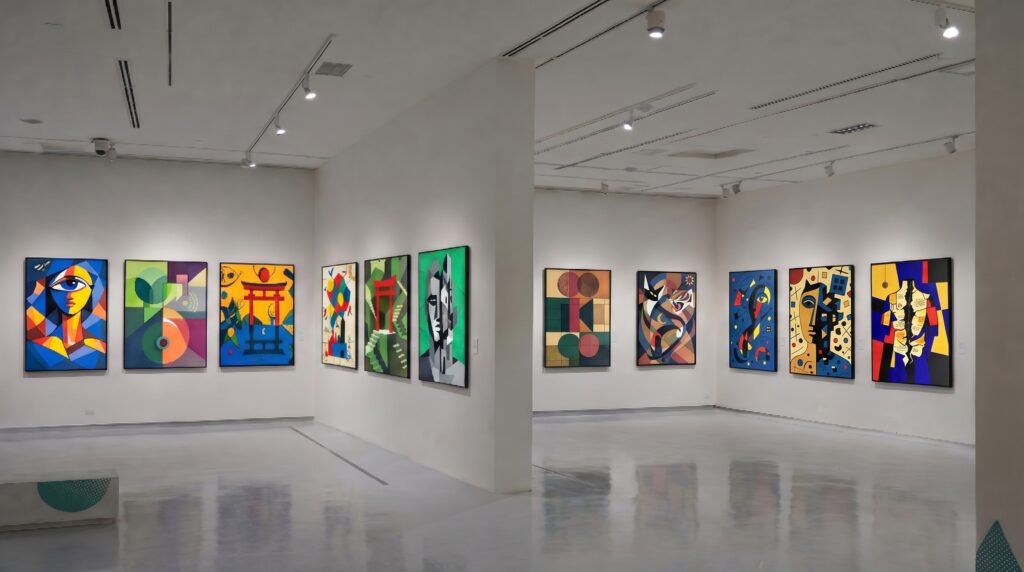
Today he lives and works in Singapore, with cultural and intellectual roots in Germany. His artistic practice translates architectural thinking into painting: space, structure and proportion are no longer constructed as physical form, but reinterpreted as mental structures and spatial experiences.
At the core of his work lies the principle of Integrity of Ambivalence.
His work investigates transitions between inner awareness and external reality, between technological order and spiritual perception. Rather than offering resolution, his paintings establish carefully structured fields of tension in which opposing forces remain present and active.
Architecture becomes the language of thought, geometry an instrument of clarification. The practice shifts from shaping physical environments to articulating inner states of awareness— moving from the design of form toward an architecture of consciousness.
.
Artist statement
My artistic practice is a visual exploration of ambivalence in contemporary life. In a world striving for clarity, I am drawn to in-between spaces — where certainties become fragile and opposites coexist.
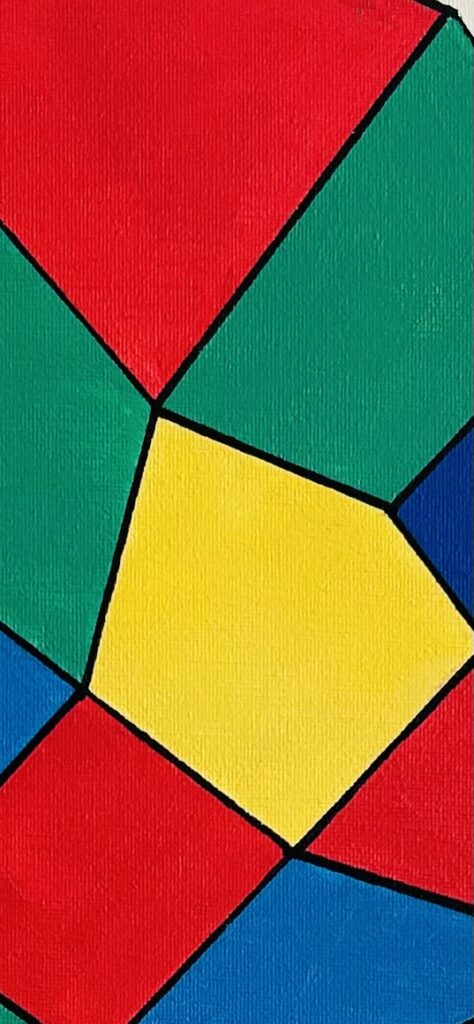
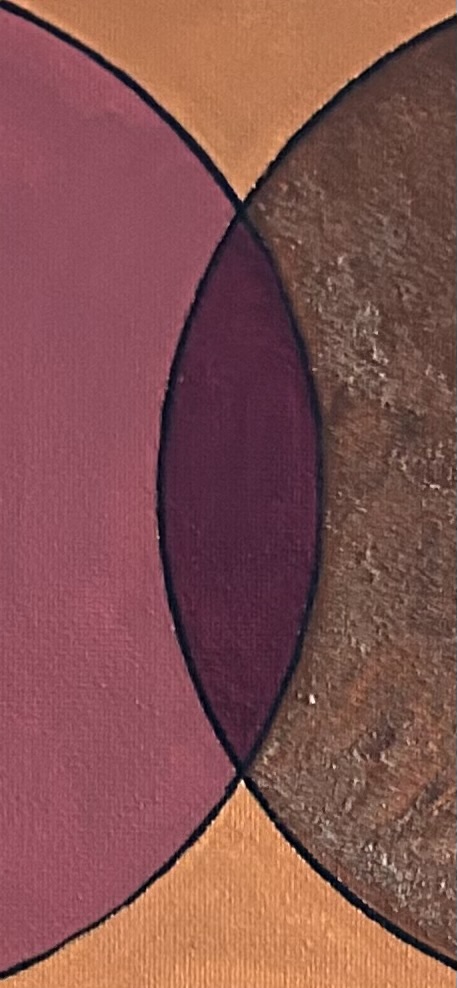
Due to my education, I think in structures, spaces and transitions, which I translate into painting. Lines, planes and signs structure emotional, mental as well as social states without simplifying them. My geometric-symbolic visual language is not abstraction for its own sake, but a precise instrument for exploring contemporary questions of identity, perception and relationship.
My work operates within fields of tension: nature and urbanity, rationality and transcendence, proximity and distance, human and machine.
Shaped by a spatial and structural way of thinking, I understand ambivalence not as contradiction but as a state of integrity — the ability to hold opposing forces simultaneously and render them visible so they can be used productively.
My work invites quiet reflection rather than immediate interpretation.
Private Insights
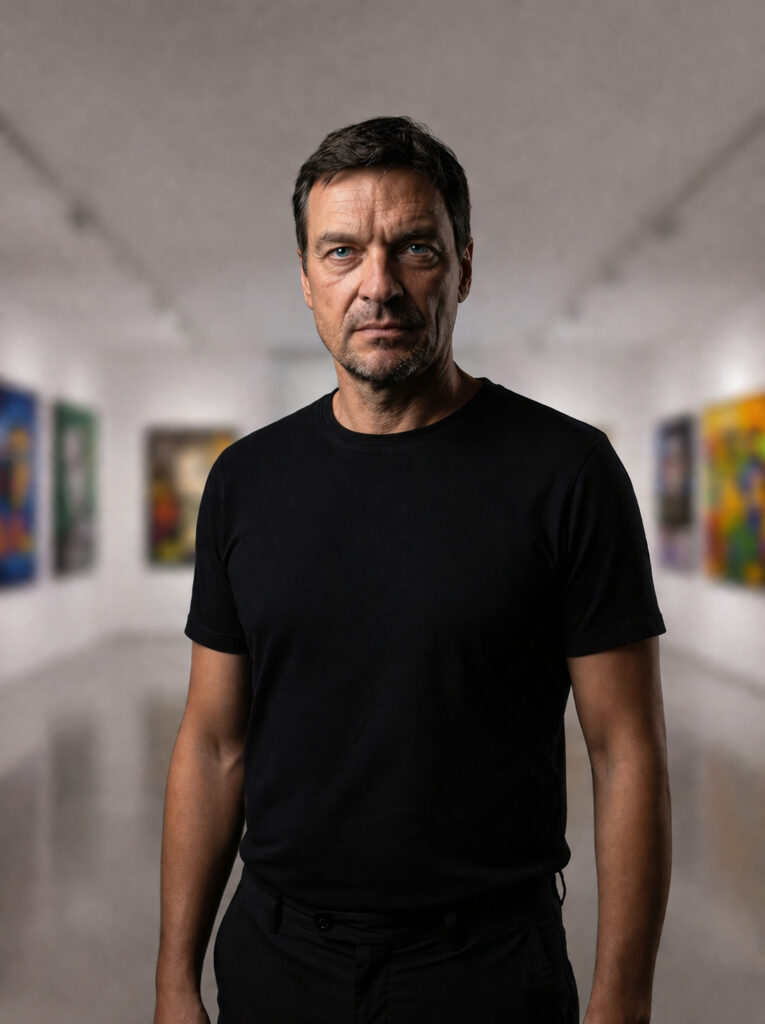
The artist name Míru is a condensation of my given name, Michael Rupprecht. This deliberate reduction marks an inner transition for me — the moment when professional clarity gave way to an existential search.
As a child of early Generation X, I grew up during a period of profound transformation. Clear ideological certainties dissolved, technological progress promised freedom while simultaneously creating new dependencies and the world began to oscillate between rationalisation and the search for meaning. This experience of being in-between — between stability and change, order and dissolution — has deeply shaped my perception and way of thinking.
My roots lie in western Germany, along the Lower Rhine. The openness of the landscape, life in rural surroundings and the proximity to water and horizon nurtured an early sensitivity to natural rhythms, cycles and energies. Nature has never been the opposite of culture for me, but rather its foundation.
At the same time, a deep curiosity for what lies beyond the familiar emerged. Travel, encounters with other cultures and life within different social systems broadened my perspective and challenged assumed certainties. For me, travelling was never about consuming places, but about gaining insight. What fascinated me most was not political systems, but the diverse ways people relate to belief, transcendence and meaning — the human attempt to bring order to the invisible and to find orientation within a contradictory world.
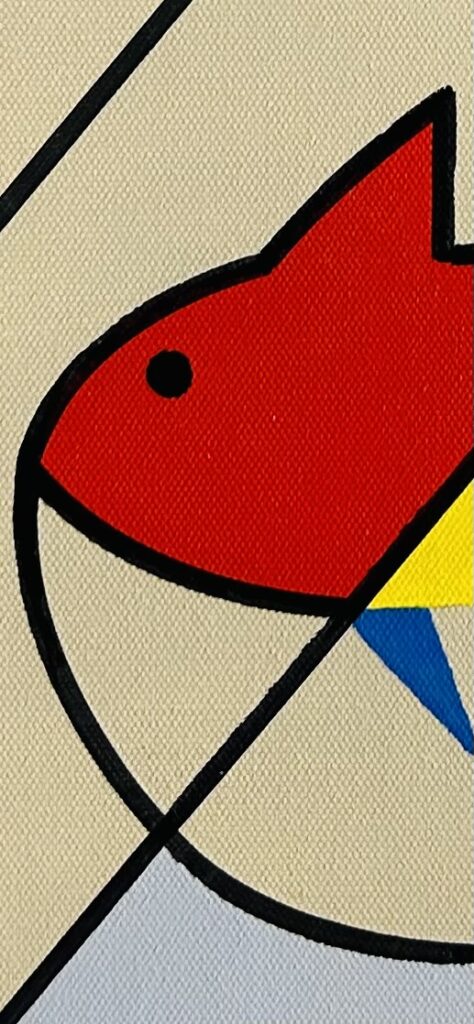
In Shintoism, which quietly permeates everyday life in Japan and is closely interwoven with Buddhism, I encountered a worldview that has had a lasting influence on me. It is a perspective in which human beings, nature, space and time are inseparably connected. Energy is not an abstract concept, but something that can be experienced. It flows through living beings, landscapes and places. Life ends when it is exhausted — but the flow itself does not cease. Somewhere, something new begins.
I do not know where we come from.
I do not know what consciousness truly is.
But I know that we can sense energy — in people, landscapes and spaces. And that something is always at work, between order and chaos, structure and dissolution.
This is precisely where my art emerges.
Out of clarity and doubt.
Out of construction and openness.
My artistic practice moves within this field of tension — between constructive thinking and clear structures on the one hand and a deep sensitivity to the immeasurable, the intuitive and the spiritual on the other. These poles are not reconciled, but deliberately placed in relation to one another.
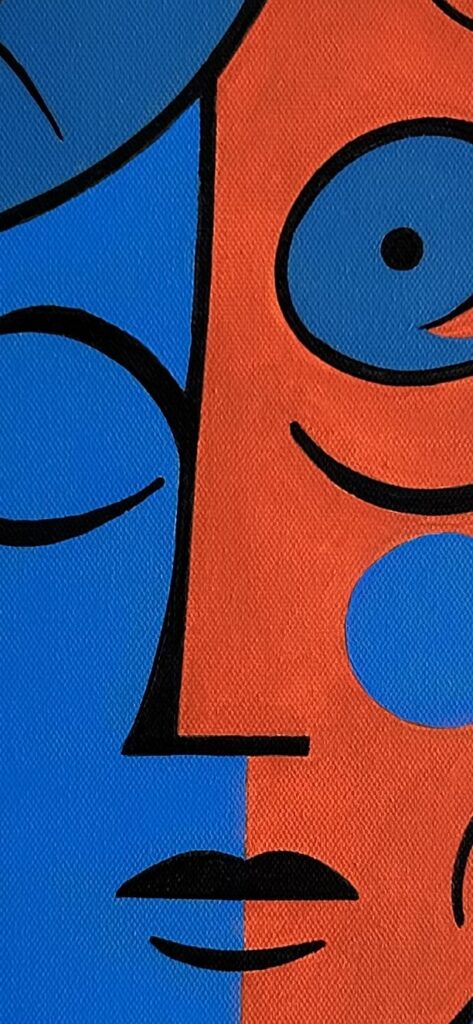
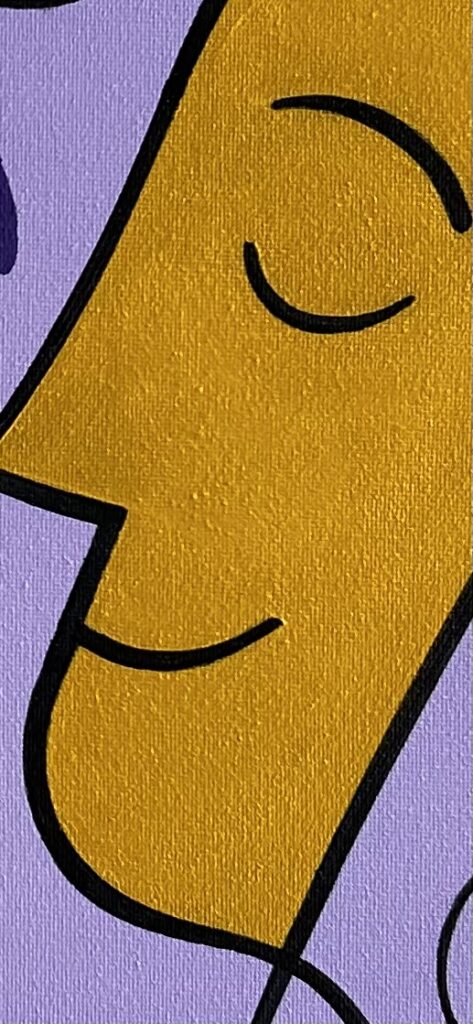
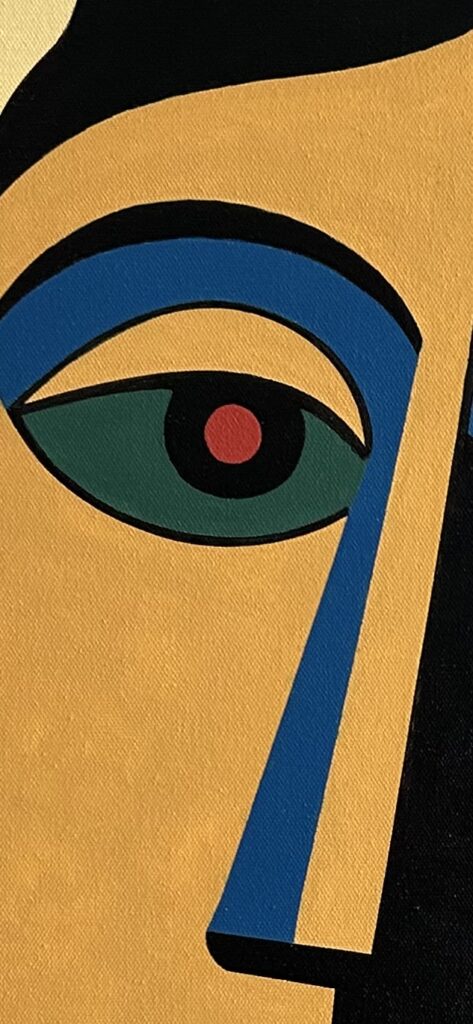
My works do not seek to decide; they seek to remain open. They invite the viewer to endure tension — between security and freedom, control and surrender, human and machine, rationality and transcendence.
For me, art is not a place of solutions, but a space of endurance.
A space in which all these opposite pairs are allowed to coexist.
My images do not provide answers — they open in-between spaces.
Perhaps movement emerges there.
And perhaps something personal begins.